
Sprachenlernen24 Powered by

Learn French for English speakers

Choose another language course
Learn French in a different way! Have fun with the French language while getting to know someone!
Flirting course

Online language course

French – Flirting course – Online language course

Learn French with a clear focus: Flirting course. Decide whether this course matches your starting point and turn your goal into a repeatable study routine.

View course details and current price

You will continue to the course provider, where you can check the binding course details and place your order.
Is this course right for you?

Start with what you want to do in French. Choose Flirting course when this focus matches the situations in which you plan to use the language.

Long-term memory learning: build knowledge in stages

Recognising a word today is only the beginning. The long-term memory method revisits material over time so that you can practise recalling it later. The provider presents its combination of organised revision, active questioning and short daily sessions as a way to learn languages much faster than with conventional methods.

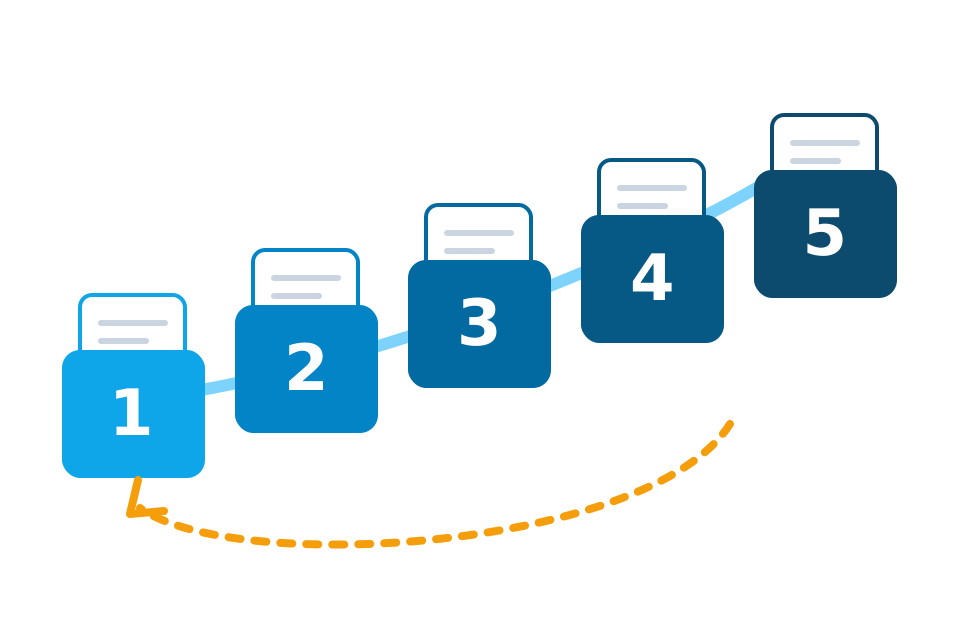
In its five-stage system, new words start in the first stage. Correct answers move them forward; incorrect answers send them back to the first stage. The software organises this process, directing attention towards words that still need work. Reaching a later stage shows progress; continued use helps keep the vocabulary available.

Long-term memory learning: build knowledge in stages

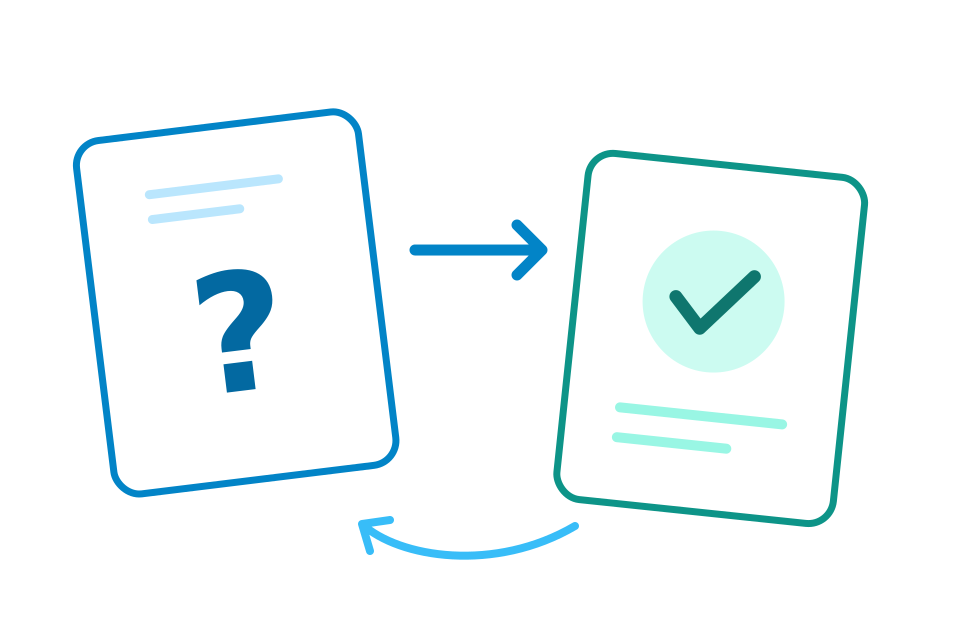
Recall first, check your answer, then use the word

Try to produce the word or phrase before revealing the answer. Unlike simply rereading a list, this gives you a direct check of what you can recall independently. Say the answer aloud and, where available in your chosen product, compare it with the recording. Check meaning, spelling and pronunciation.

Treat a mistake as a useful signal for your next review. Make a short sentence of your own, such as an order in a restaurant or a question about an appointment. Stories and novels give you another opportunity to encounter vocabulary in context. Reading, listening, conversation and vocabulary practice contribute different things to your learning.

Recall first, check your answer, then use the word

A practical routine for 17 minutes a day

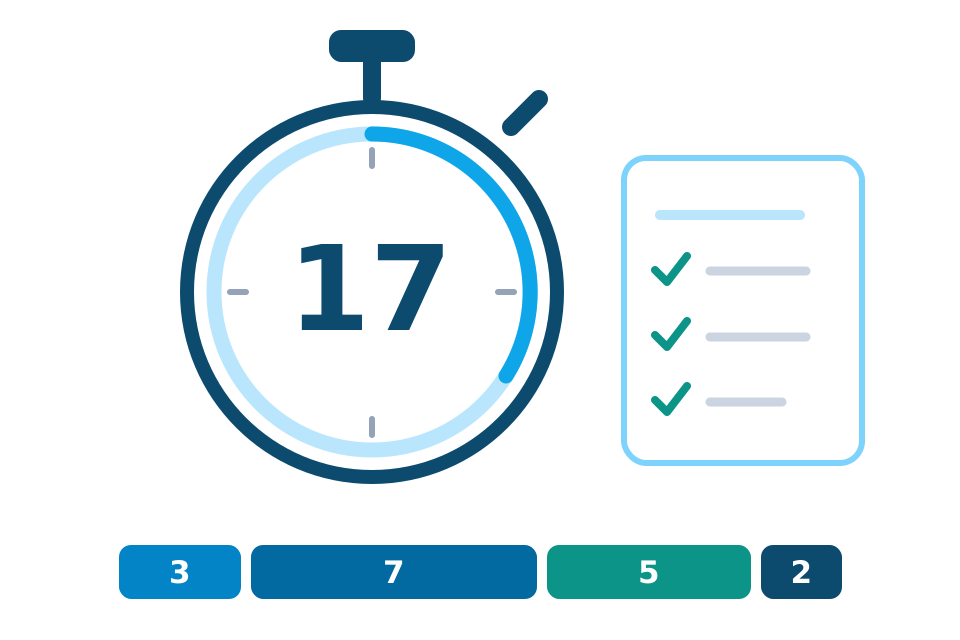
The provider recommends a daily study period of 17 minutes. Choose a regular time and prepare your material so that getting started is easy. One possible routine is 3 minutes recalling previous material, 7 minutes reviewing due or difficult words, 5 minutes on a small amount of new material and 2 minutes making your own sentence and choosing your next step.

This is an example, not a fixed software setting. Spend more time on revision when you need it. After several days, check what you can understand and express without notes. Progress depends on your starting point, consistency and use of the language; a daily time target does not guarantee fluency by a particular date.

A practical routine for 17 minutes a day

Discover countries and regions

Some countries and regions connected with French: France, Belgium, Canada. Use the language to handle more of your visit independently: read local information, ask about connections and talk with hosts. This is a selection, not a complete map of where the language is spoken. Several languages and regional varieties can coexist within one country.

Regional impressions · French

Get to know the language

Writing system: Latin. Connect the sound of a word with its written form. Learn expressions in short contexts and read them aloud. Notice how people greet one another, ask follow-up questions and express agreement. Regional pronunciation and vocabulary may differ from your learning examples.

Regional impressions · French

Why learning French can be worthwhile

Learning French can make encounters, media and personal connections more accessible. Understanding a menu or asking a follow-up question gives you more independence. Focused practice can also help you express needs more precisely at work. For Flirting course, choose a personal reason and turn it into a task you can check: hold a conversation, write a message or understand a short piece of content.

Language in everyday life · French

Put your learning into practice

Choose a situation related to Flirting course that you want to handle in French. Write a question, a possible answer and a follow-up question to turn individual words into a usable conversation.

Get started in three steps

Pick a small, specific goal. Set aside regular study times and revisit difficult material. At the end of the week, check what you can say without looking at your notes.

Check before you book

Compare the course contents, entry requirements and provider terms. Check the access period, supported devices and current total price so you can choose what you actually need.

Frequently asked questions

How do I choose my starting point?

Start with what you want to do in French. Choose Flirting course when this focus matches the situations in which you plan to use the language.

How do I build a study habit?

Pick a small, specific goal. Set aside regular study times and revisit difficult material. At the end of the week, check what you can say without looking at your notes.

How does the long-term memory method work?

Recognising a word today is only the beginning. The long-term memory method revisits material over time so that you can practise recalling it later. The provider presents its combination of organised revision, active questioning and short daily sessions as a way to learn languages much faster than with conventional methods.

How can I review vocabulary effectively?

Try to produce the word or phrase before revealing the answer. Unlike simply rereading a list, this gives you a direct check of what you can recall independently. Say the answer aloud and, where available in your chosen product, compare it with the recording. Check meaning, spelling and pronunciation.

How can I divide my 17 minutes of study?

The provider recommends a daily study period of 17 minutes. Choose a regular time and prepare your material so that getting started is easy. One possible routine is 3 minutes recalling previous material, 7 minutes reviewing due or difficult words, 5 minutes on a small amount of new material and 2 minutes making your own sentence and choosing your next step.

31-day money-back guarantee

Try your language course for 31 days. If you are not satisfied, the course provider will refund 100% of the purchase price.

View course details and current price

You will continue to the course provider, where you can check the binding course details and place your order.
More courses for learning French

Choose another language course